
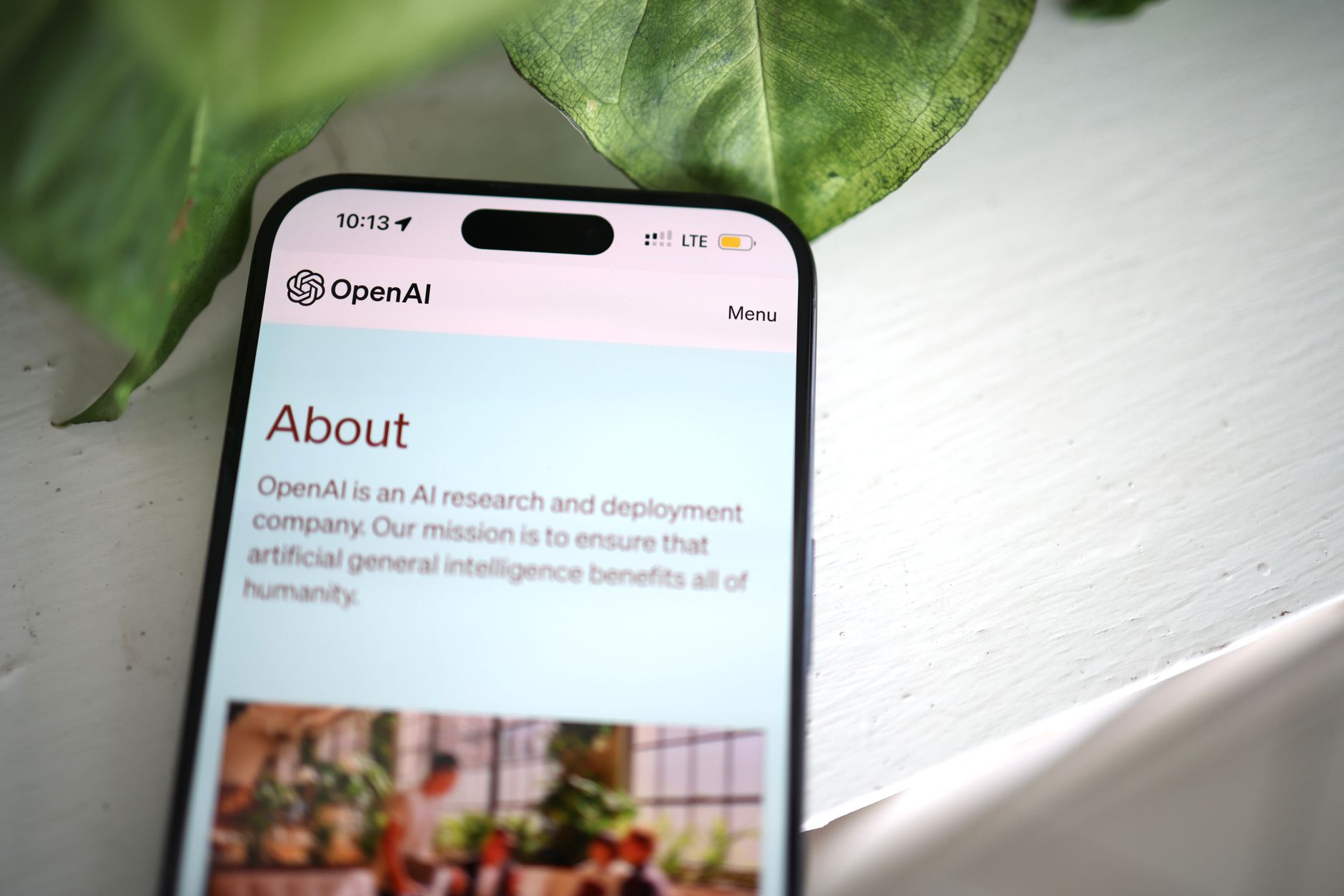
OpenAI math breakthrough is reshaping our understanding of mathematical concepts. This recent development points to exciting possibilities beyond traditional math.
What is the OpenAI math breakthrough?
The recent OpenAI math breakthrough has garnered significant attention from both the scientific community and the general public. This innovative development showcases the potential of advanced artificial intelligence in solving complex mathematical problems that have long challenged researchers.
At its core, the breakthrough involves a new algorithm that enhances the ability of AI to understand and manipulate mathematical concepts. This advancement not only improves computational efficiency but also allows for more accurate predictions and analyses in various fields, such as physics, engineering, and economics.
Some key features of the breakthrough include:
- Enhanced problem-solving: The algorithm can tackle previously unsolvable equations, providing solutions that were once thought to be out of reach.
- Cognitive learning: The AI demonstrates an ability to learn from its mistakes, refining its approaches over time.
- Interdisciplinary applications: The technology can be applied across numerous scientific disciplines, paving the way for new discoveries.
This OpenAI math breakthrough is seen as a pivotal moment in the intersection of mathematics and artificial intelligence, potentially redefining how we approach problem-solving in the future.
How does it change our understanding of math?
The recent OpenAI math breakthrough has the potential to reshape our understanding of mathematics in several profound ways. Traditionally, mathematical problems have been approached through established methodologies, often limiting innovative solutions. However, this breakthrough introduces a paradigm shift that encourages exploration beyond conventional boundaries.
One of the key implications of this advancement is the enhancement of computational capabilities. By leveraging advanced algorithms, complex equations that once seemed insurmountable can now be solved more efficiently. This efficiency not only accelerates research but also opens doors to new fields of inquiry.
Furthermore, the breakthrough fosters collaboration between mathematics and other disciplines, such as computer science and physics. As mathematical models become more accessible, interdisciplinary projects can flourish, leading to innovative solutions to real-world problems.
Additionally, this development challenges the traditional view of mathematics as a purely abstract discipline. It emphasizes the importance of practical applications, making math more relevant to everyday life.
In summary, the OpenAI math breakthrough is not merely a technical achievement; it represents a transformative moment that could redefine the essence of mathematical inquiry and its role in society.
Implications for future AI developments
The recent OpenAI math breakthrough is poised to have significant implications for future developments in artificial intelligence. By enhancing our understanding of mathematical principles, this innovation opens up new avenues for research and application across various fields.
One of the most notable implications is the potential for improved problem-solving capabilities in AI systems. As these systems become more adept at handling complex mathematical tasks, they may also excel in related domains such as:
- Data analysis
- Machine learning algorithms
- Optimization problems
- Scientific modeling
Furthermore, this breakthrough may facilitate advancements in interdisciplinary research, where mathematics intersects with fields like physics, biology, and economics. Researchers could leverage AI to uncover patterns and solutions that were previously elusive, thus accelerating innovation.
Moreover, the implications extend to education, where AI can provide personalized learning experiences in mathematics. By understanding individual learning needs, AI tools can adaptively guide students through challenging concepts, enhancing their overall comprehension.
In summary, the OpenAI math breakthrough not only reshapes our understanding of mathematics but also sets the stage for transformative developments in AI technology, with far-reaching consequences across multiple disciplines.
Expert opinions on the breakthrough
Experts across various fields have weighed in on the significance of the OpenAI math breakthrough, emphasizing its potential to redefine mathematical understanding and application. Leading mathematician Dr. Emma Grayson stated, “This breakthrough demonstrates that AI can solve problems previously thought to be insurmountable, opening doors to new theories.” She believes that the implications extend beyond mathematics, influencing domains such as physics and economics.
Additionally, tech analyst Tom Rivera noted, “The integration of this advanced mathematical framework into AI systems could lead to significant improvements in algorithm efficiency.” Rivera argues that this could pave the way for smarter AI tools capable of tackling complex real-world issues.
Meanwhile, cognitive scientist Dr. Lisa Chen raised concerns about the ethical use of such powerful technology, saying, “While the OpenAI math breakthrough offers incredible opportunities, we must tread carefully to avoid unintended consequences.” She advocates for a balanced approach to innovation that considers both the benefits and potential risks.
As discussions continue, many in academia and industry are closely monitoring these developments, eager to see how the OpenAI math breakthrough will shape future research and applications.
Potential applications in various fields
The recent OpenAI math breakthrough has the potential to revolutionize multiple fields beyond mathematics itself. Researchers and industry experts are exploring various applications that could benefit from this innovative approach.
- Education: By enhancing personalized learning experiences, this breakthrough could help students grasp complex mathematical concepts more intuitively, fostering a deeper understanding and appreciation for the subject.
- Finance: The new mathematical techniques may optimize algorithms used in trading and risk management, allowing for more accurate predictions and improved decision-making processes.
- Engineering: Innovations in mathematical modeling could lead to more efficient designs and solutions in engineering projects, from infrastructure to energy systems.
- Healthcare: In medical research, the breakthrough might enable better statistical analysis, improving patient outcomes through more effective treatment plans based on mathematical predictions.
- Artificial Intelligence: As AI systems increasingly rely on mathematical frameworks, this advancement may enhance machine learning algorithms, making them more robust and efficient.
As diverse sectors begin to integrate these new mathematical insights, the implications of the OpenAI math breakthrough could extend far beyond what was previously thought possible.
Conclusion: The future of mathematics
As we stand on the brink of a new era in mathematics, the OpenAI math breakthrough signals not just an innovation in computational capabilities but also a profound shift in how we perceive and utilize mathematical concepts. This advancement could redefine educational methodologies, allowing students to grasp complex theories with enhanced clarity and support.
The implications of this breakthrough extend far beyond the classroom. In fields such as engineering, finance, and data science, professionals are likely to leverage these new capabilities to solve intricate problems more efficiently. The ability of AI to tackle advanced mathematical challenges opens doors to innovations that were previously deemed unattainable.
Furthermore, as experts weigh in on the potential of this development, it becomes clear that the impact of OpenAI’s math breakthrough could lead to a more integrated relationship between human intuition and machine learning. As AI systems become more adept at mathematical reasoning, we may witness a transformation in research methodologies and problem-solving techniques.
In conclusion, the future of mathematics is poised for significant change. With the OpenAI math breakthrough at its forefront, we can anticipate a landscape where mathematical exploration is not only deeper but also more accessible to a wider audience.
Photo by Solen Feyissa on Pexels



Leave a Reply